You can eat all the Kimchi in the world and invest in the most expensive supplements, but if your daily habits are out of sync, your internal ecosystem will remain in distress. We often fall into the trap of thinking that health is purely a matter of nutrition. However, the latest research into the human microbiome reveals that your “Second Brain” is actually a high-precision instrument, constantly reacting to the world outside your plate. To truly achieve lasting vitality, you must look beyond diet and address the environmental factors that dictate how your bacteria function.
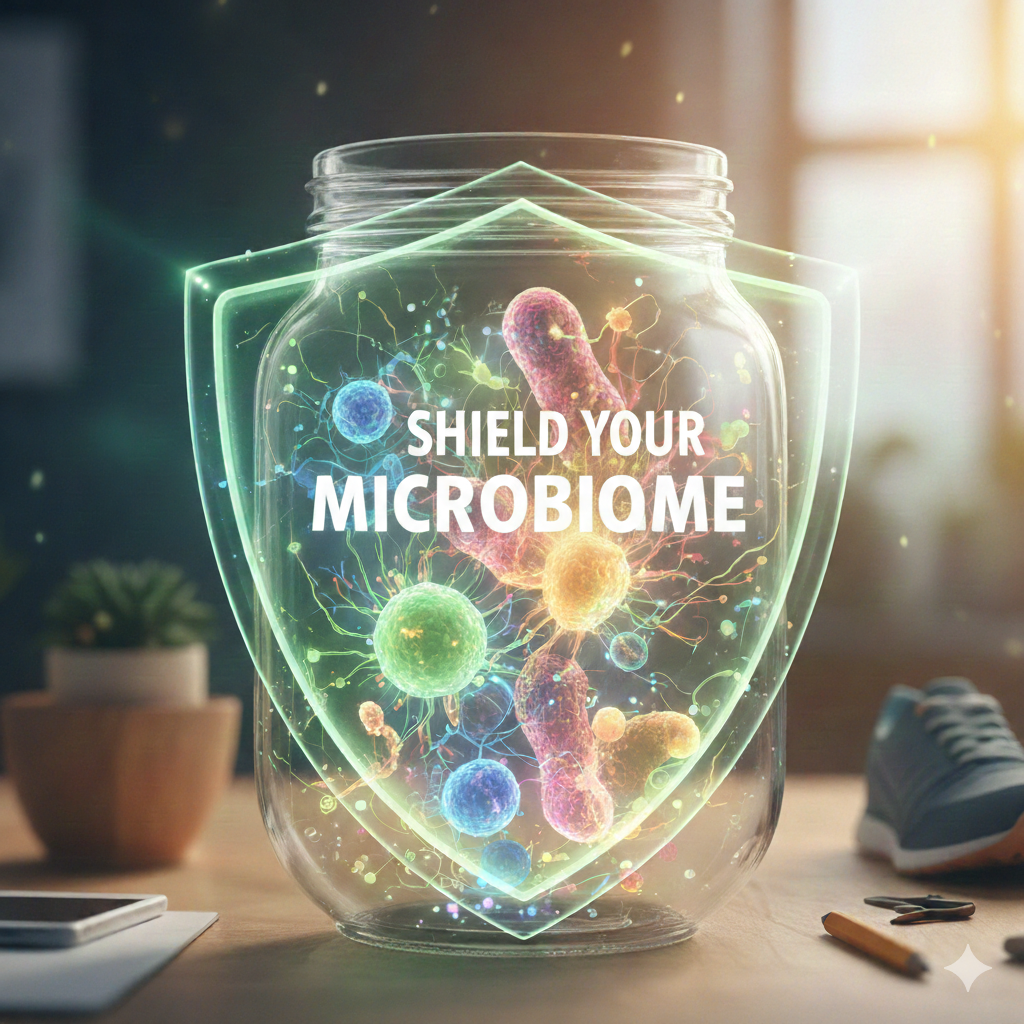
In this final installment of our series, we shift our focus from what you eat to how you live. Even with a perfect meal plan, factors like chronic cortisol, irregular sleep cycles, and a lack of movement can act as “invisible toxins” that undermine your microbiome health. To truly heal your gut and skyrocket your daily energy, you must learn to protect these delicate microbes from the stresses of modern life.
From the biological “night shift” your bacteria pull while you sleep to the specific way stress physically thins your intestinal lining, these lifestyle secrets are the final, essential pieces of the puzzle for total body wellness. Let’s explore how you can align your daily routine to shield your microbiome and turn your body into a resilient vessel for health.
Table of Contents
1. The Cortisol Connection: How Chronic Stress Acts as a “Microbial Toxin”
We often think of stress as a purely mental state, but to your gut, stress is a physical attack. When your brain perceives a threat—whether it’s a looming work deadline or a heated argument—it activates the Hypothalamic-Pituitary-Adrenal (HPA) axis. This triggers a flood of Cortisol, the body’s primary stress hormone. While cortisol is essential for survival, its chronic presence is devastating to your “Second Brain.”
A. The Thinning of the Protective Shield
Your gut is protected by a thick layer of mucus that houses your beneficial bacteria and prevents pathogens from touching your intestinal wall. High levels of cortisol physically thin this mucosal barrier.
- The Result: Without this protective “slime,” your gut lining is exposed to stomach acid and harmful microbes. This leads to Increased Intestinal Permeability (Leaky Gut), allowing metabolic waste to seep into your bloodstream and trigger body-wide inflammation.
B. Selective Starvation: How Stress “Feeds” the Wrong Microbes
Stress doesn’t just kill bacteria; it chooses which ones survive. Interestingly, certain harmful bacteria (pathobionts) have evolved to “listen” to human stress hormones.
- The Mechanism: When cortisol and adrenaline levels rise, they can stimulate the growth of pathogenic bacteria like E. coli. At the same time, stress reduces the production of Short-Chain Fatty Acids (SCFAs), which are the primary food source for your “good” bacteria like Lactobacillus and Bifidobacterium.
- The Outcome: Stress effectively “starves” your allies and “feeds” your enemies, leading to rapid Dysbiosis (an imbalanced microbiome).
C. The “Fight or Flight” Digestion Shutdown
When you are in a “Fight or Flight” state, your body prioritizes immediate survival over long-term maintenance. To save energy, your brain diverts blood flow away from your digestive organs and toward your heart and muscles.
- Stagnation: With less blood flow, the contractions of your gut (peristalsis) slow down or become erratic. This causes food to sit in your system longer than it should, leading to fermentation, gas, and the overgrowth of harmful bacteria in the small intestine (SIBO).
- Enzyme Deficiency: Stress inhibits the production of digestive enzymes and stomach acid. This means even if you are eating “superfoods,” your body cannot properly break them down, leading to nutrient deficiencies despite a healthy diet.
🛡️ Tactical Stress-Shields for Your Gut
To protect your microbiome from the “Cortisol Toxin,” you need to implement these three tactical habits:
- The “Vagal Tone” Reset: The Vagus Nerve is the “brake pedal” for stress. You can stimulate it by splashing cold water on your face or singing/humming loudly for 60 seconds. This physically signals your gut to move out of “Fight” mode and back into “Digest” mode.
- The Pre-Meal Ritual: Never eat while answering emails or watching the news. Take five deep belly breaths before your first bite. This simple 30-second habit can lower your cortisol levels enough to allow your digestive enzymes to function correctly.
- Adaptogenic Support: Consider incorporating “Adaptogens”—herbs that help the body manage cortisol—into your routine. Ashwagandha and Holy Basil are well-researched for their ability to soothe the HPA axis and protect the gut lining from stress-induced damage.
2. Sleep Hygiene is Gut Hygiene: The Biological Clock of Your Microbes

We often view sleep as a passive state for the brain, but for your microbiome, it is the most active time of the day. Recent studies in Chronobiology have revealed that your gut bacteria follow a strict Circadian Rhythm—a 24-hour internal clock—just like you do. When you disrupt your sleep, you aren’t just tired; you are effectively giving your trillions of microbes “jet lag.”
A. The “Night Shift” and Gut Wall Repair
Your gut microbes have a division of labor based on light and dark cycles.
- The Day Shift: During waking hours, your “diurnal” bacteria are focused on metabolism, breaking down the fibers you eat, and managing energy harvest.
- The Night Shift: During deep sleep, a different set of “nocturnal” microbes takes over. Their primary job is Mucosal Maintenance. They clean the debris from the intestinal lining and stimulate the production of new cells.
- The Consequence: If you stay up late or have fragmented sleep, the “night shift” workers never get the signal to start. This leads to a thinning of the gut wall, which is a leading cause of chronic inflammation and metabolic fatigue.
B. The Melatonin Factory: More Than a Sleep Hormone
Most people associate Melatonin with the pineal gland in the brain, but the gut actually contains 400 times more melatonin than the brain.
- The Antioxidant Effect: In the gut, melatonin acts as a powerful antioxidant that protects the microbiome from oxidative stress. It also regulates the “motility” (movement) of your intestines.
- The Vicious Cycle: Poor gut health reduces the production of the precursor to melatonin (Serotonin). This makes it harder to fall asleep, which then causes more gut damage. Breaking this cycle is the secret to waking up with high energy and a flat stomach.
C. Microbial Jet Lag: Why Consistency is Key
Scientists have discovered that your gut bacteria actually “anticipate” when you are going to eat and sleep. This is governed by Clock Genes within the bacteria themselves.
- Social Jet Lag: If you sleep 8 hours on weekdays but stay up until 3 AM on weekends, your microbes become “disoriented.” This confusion causes them to produce inflammatory byproducts that can lead to insulin resistance and sugar cravings the following Monday.
- Shift Work Impact: This is why people who work irregular night shifts have a much higher statistical risk of developing IBS (Irritable Bowel Syndrome) and obesity—their microbial clock is permanently out of sync with their environment.
🌙 The “Gut-Sleep” Protocol: How to Sync Your Rhythm
To protect your microbiome’s internal clock, implement these three Circadian Hygiene habits:
- The “Early Finish” Rule: Finish your last meal at least 3 hours before bed. Your gut needs to transition from “Digestion Mode” to “Repair Mode” before you fall asleep. If your stomach is full of food at midnight, your “night shift” microbes are forced to stay on the “day shift,” preventing essential gut wall repair.
- Morning Light Anchoring: Step outside for 5–10 minutes within an hour of waking up. The blue light from the sun enters your eyes and sends a signal through the Suprachiasmatic Nucleus (SCN) to your gut, telling your bacteria to begin their daytime metabolic functions.
- Temperature Management: Your gut prefers a slightly cooler body temperature to enter deep repair mode. Avoid heavy, spicy meals late at night, which can raise your core temperature and disrupt the delicate microbial “cleanup” process.
3. The “Outside-In” Effect: Movement and Environmental Re-wilding
To truly heal the gut, we must step out of the sterile, sedentary environments of modern life. Your microbiome thrives on diversity and motion. By combining physical activity with environmental exposure, you create a “biological challenge” that forces your gut bacteria to become stronger, more diverse, and more resilient.
A. Movement as a “Microbial Pump”
You don’t need to be an elite athlete to have a healthy gut; in fact, extreme over-training can sometimes cause gut stress. However, moderate, consistent movement is essential for what scientists call “gut motility.”
- Peristalsis & Stagnation: Physical movement stimulates the smooth muscles of your digestive tract. This ensures that food moves through your system at the right speed. When we sit all day, our digestion “stagnates,” allowing harmful bacteria to ferment and produce excess gas and toxins.
- The SCFA Boost: Exercise has been shown to specifically increase the production of Short-Chain Fatty Acids (SCFAs) like butyrate. These compounds are the primary fuel for your colon cells and act as powerful anti-inflammatories for your entire body. Even a 15-minute brisk walk after a meal can significantly improve your post-prandial (after-meal) blood sugar and digestion.
B. Environmental Re-wilding: The “Hygiene Hypothesis”
In our modern world, we have become “too clean.” Between antibacterial soaps, air purifiers, and spending 90% of our time indoors, we have isolated ourselves from the very microbes that keep our immune systems sharp. This is known as the Hygiene Hypothesis.
- The “Old Friends” Theory: For millions of years, humans evolved alongside “soil-based organisms” (SBOs). These microbes, found in healthy dirt and natural water, act as “trainers” for our immune system. When we lose contact with them, our immune system becomes bored and hypersensitive, leading to allergies and autoimmune issues.
- Get Your Hands Dirty: Engaging in activities like gardening or hiking doesn’t just lower stress; it physically “re-seeds” your microbiome. When you touch the soil or breathe in forest air (rich in phytoncides), you are inhaling and absorbing a diverse array of microbial life that strengthens your “Second Brain.”
C. The “Pet Effect”: A Living Probiotic
If you can’t get to a forest every day, a furry friend might be the next best thing. Research shows that households with dogs have much higher microbial diversity.
- Pets act as a bridge between the outdoors and your home, bringing in diverse bacteria that “challenge” and strengthen your family’s immune systems. Children raised with pets are statistically less likely to develop asthma or gut-related allergies because their microbiomes were “educated” by these environmental microbes early on.
🌿 Practical Tips for “Re-wilding” Your Life
- The Post-Meal Stroll: Instead of sitting on the couch after dinner, take a 15-minute walk. This “pumps” your digestive system and prevents the “heavy” feeling of undigested food.
- Outdoor Exercise: Whenever possible, move your workout outside. The combination of fresh air, natural light (for your circadian rhythm), and environmental microbes provides a triple-win for your gut.
- Nature Therapy (Shinrin-yoku): Practice “forest bathing.” Even spending 20 minutes in a park can lower your cortisol levels (protecting your gut lining) while exposing you to beneficial airborne microbes.
- Ditch the Antibacterial Everything: Stop using harsh antibacterial dish soaps or hand sanitizers unless absolutely necessary. Allow your skin and environment to host a healthy, natural balance of bacteria.
4. The “Gut-Brain” Morning Routine: A 10-Minute Biological Startup
How you spend your first 60 minutes of the day determines whether your microbiome spends the day in “Defense Mode” or “Growth Mode.” By following this structured 10-minute routine, you align your brain and gut for optimal communication and energy production.
Step 1: The “Inner Flush” Hydration (Minutes 1–2)
Before reaching for the coffee, your gut needs a “flush.” After 7–8 hours of sleep, your body is dehydrated, and your digestive tract is coated in cellular waste from the night’s repair cycle.
- The Action: Drink 500ml (approx. 16oz) of room-temperature or slightly warm water.
- The Science: This triggers the Gastrocolic Reflex, which signals your colon to contract and clear out waste. Adding a pinch of high-quality sea salt or a squeeze of lemon can provide essential electrolytes that help “wake up” the electrical signaling between your gut and your brain.
Step 2: The “Light Anchor” Exposure (Minutes 3–5)
Your gut bacteria cannot see the sun, but they “feel” it through the signals sent from your brain. This is known as Circadian Anchoring.
- The Action: Step outside or stand by a wide-open window. Do not wear sunglasses. Allow the morning sunlight to hit your retinas for 2–3 minutes.
- The Science: The blue light spectrum of the morning sun travels through the optic nerve to the Suprachiasmatic Nucleus (SCN). The SCN then sends a message to your gut to stop producing melatonin and start producing Gastrin and Hydrochloric Acid (HCL) in preparation for your first meal.
Step 3: Vagal Nerve Activation (Minutes 6–8)
The Vagus Nerve is the “superhighway” of the Gut-Brain Axis. If this nerve is “toned” and active, your digestion is smooth; if it is weak, you experience bloating and sluggishness.
- The Action: Spend 2 minutes doing one of the following: Cold water face splashing, loud humming, or “Gargling.”
- The Science: Gargling or humming activates the muscles in the back of your throat that are directly connected to the Vagus nerve. This physical vibration stimulates the nerve, switching your body from the “Fight or Flight” state into the “Rest and Digest” state before you encounter the day’s stressors.
Step 4: Diaphragmatic “Gut Massage” (Minutes 9–10)
Most people breathe from their chest, which signals stress to the brain. Deep, belly breathing acts as a mechanical massage for your internal organs.
- The Action: Sit comfortably and place one hand on your belly. Inhale through your nose for 4 seconds, feeling your belly push your hand out. Exhale through your mouth for 6 seconds. Repeat for 2 minutes.
- The Science: Deep breathing physically moves the diaphragm up and down, which massages the intestines and improves blood flow to the gut lining. This lowers Cortisol levels immediately, ensuring that your gut lining remains strong and “leak-proof” throughout the day.
⏰Why This Routine Works
By the end of these 10 minutes, you have successfully:
- Hydrated the intestinal mucosal lining.
- Synced your microbial clock with the sun.
- Activated the parasympathetic nervous system.
- Lowered the inflammation-causing cortisol.
This routine turns your body into a “resilient vessel,” allowing you to handle coffee, breakfast, and work stress without triggering digestive distress.
Conclusion: Integrating the “Second Brain” Philosophy into Your Life
Over this three-part series, we have traveled from the microscopic world of the Leaky Gut to the culinary art of fermentation, and finally to the rhythmic science of Sleep and Stress. If there is one thing to take away, it is this: your gut health is not a single destination, but a continuous conversation between your body and your environment.
To finalize your journey, let’s look at the three pillars of a “Gut-First” lifestyle.
A. The 80/20 Rule for Long-Term Gut Resilience
You don’t have to live a “perfect” life to have a healthy microbiome. The goal is consistency, not perfection.
- The Strategy: Aim to follow the gut-healing protocols—eating fermented foods, getting morning sunlight, and managing stress—about 80% of the time.
- The Result: This creates enough “microbial reserve” so that when you do have a stressful week or a celebratory meal with processed foods, your gut is resilient enough to bounce back without triggering chronic inflammation.
B. Listening to the “Bio-Feedback” Loop
Your body is constantly sending you signals. A bloated stomach, a sudden skin breakout, or a midday energy crash are not “normal” parts of aging; they are your Second Brain sending you a status report.
- Action Step: Instead of reaching for an antacid or a third cup of coffee, ask yourself: Did I feed my microbes fiber today? Did I sleep out of sync with my rhythm? Am I eating in a state of stress? When you start answering these questions, you stop treating symptoms and start addressing the root cause.
C. The Future of Your Health Starts in the Gut
Modern medicine is increasingly proving that the “gut-first” approach is the most effective way to prevent chronic disease, stabilize mental health, and optimize human performance. By protecting your delicate, one-cell-thick intestinal lining, you are protecting your future self.
You now have the science, the recipes, and the routines to transform your life. The microbes in your gut are waiting—feed them well, let them rest, and move with them. Your journey to vibrant health begins with your very next bite.
🛡️ Final Series Wrap-Up: Your Gut Health Toolkit
| Series Part | Key Takeaway | Primary Action |
| Part 1: The Science 7 Surprising Reasons Your Gut Health Is the Ultimate Secret to Total Body Wellness- Part 1 | 80% of immunity is in your gut. | Protect your gut lining to stop inflammation. |
| Part 2: The Nutrition Life-Changing Gut Health Superfoods That Will Secretly Transform Your Energy- Part 2 | Probiotics + Prebiotics = Success. | Eat fermented foods and “fiber-fertilizer” daily. |
| Part 3: The Lifestyle | Stress and Sleep are “Microbial Fuel.” | Sync your morning routine with the sun. |