
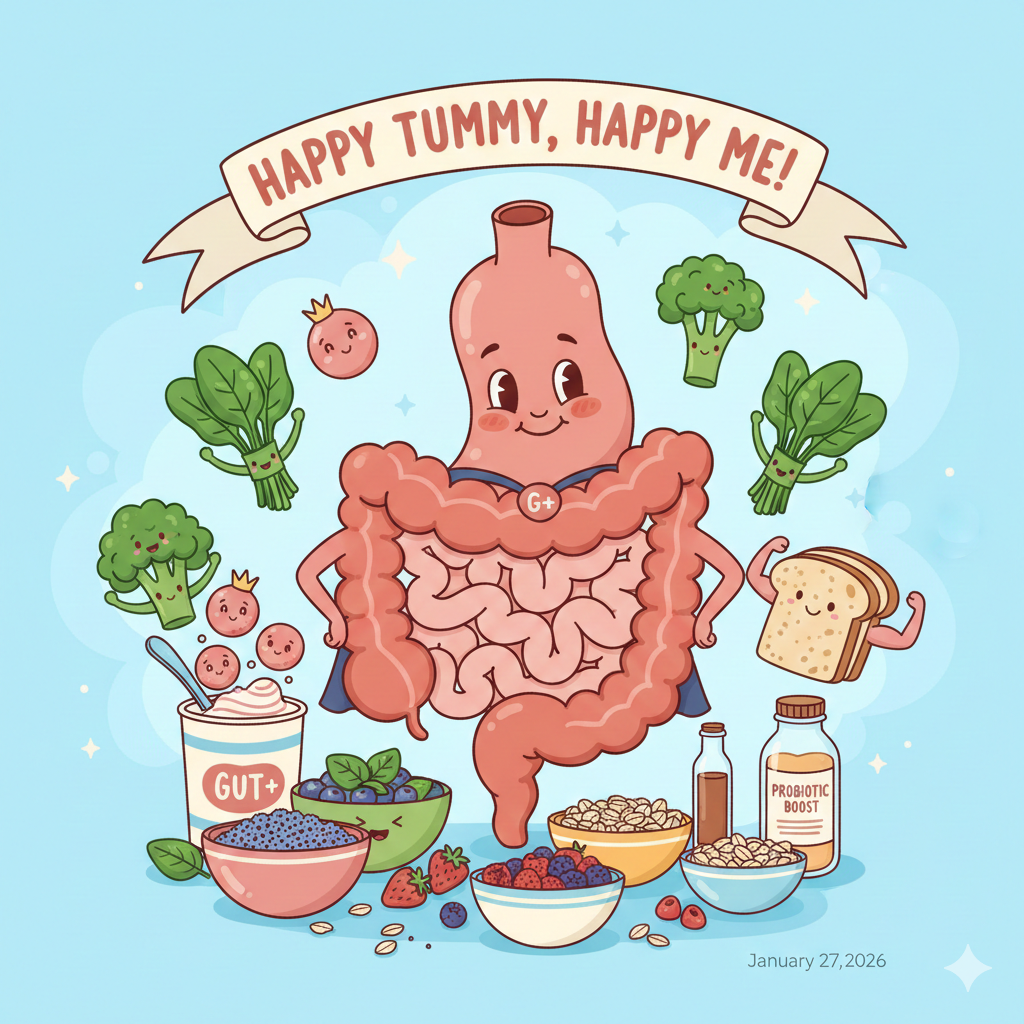
In the world of modern medicine, we often treat the body as a collection of separate parts. However, recent breakthroughs in nutritional science have revealed a powerful “command center” that influences almost everything: the human gut. Often referred to as the “Second Brain,” your gastrointestinal system does far more than just process the food you eat.
From your immune response to your mental clarity, the state of your gut microbiome determines your quality of life. In this guide, we will explore the scientific connection between your gut and your brain, and provide actionable steps to optimize your internal ecosystem.
Table of Contents
1. Understanding the Enteric Nervous System: Your “Second Brain”
Deep within the walls of your digestive system lies the Enteric Nervous System (ENS). While the ENS doesn’t write poetry or solve math problems, it communicates constantly with the brain in your skull. This network of more than 100 million nerve cells lines your gastrointestinal tract from esophagus to rectum.
Scientists have found that the ENS is a primary player in our physical and mental well-being. It’s the reason you feel “butterflies” when nervous or a “gut-wrenching” sensation during stress. Understanding this connection is the first step toward holistic health.
2. The Science of the Gut-Brain Axis (GBA)
The communication highway between your gut and your head is known as the Gut-Brain Axis. This link is bidirectional, meaning while your brain can send signals to your gut, your gut is also sending vital data back to your brain.
Crucially, about 95% of the body’s serotonin—the hormone responsible for regulating mood, sleep, and appetite—is produced in the gut. When your gut microbiome is imbalanced (a state called dysbiosis), it can lead to brain fog, anxiety, and even depression.
3. The Science of the Gut-Brain Axis: A Chemical Highway
The communication highway between your gut and your head is known as the Gut-Brain Axis. This link is bidirectional, meaning while your brain can send signals to your gut, your gut is also sending vital data back to your brain via the Vagus Nerve.
Crucially, about 95% of the body’s serotonin—the hormone responsible for regulating mood, sleep, and appetite—is produced in the gut. Furthermore, gut bacteria produce GABA (gamma-aminobutyric acid), an amino acid that helps control feelings of fear and anxiety. When your gut microbiome is imbalanced (a state called dysbiosis), it directly impairs these chemical messages, potentially leading to brain fog, chronic anxiety, and even clinical depression.
Think of your gut like a garden. In a healthy garden, you have a huge variety of flowers (good bacteria) that keep the weeds (bad bacteria) from taking over. This “biodiversity” is the key. These good bacteria do jobs your body can’t do alone, such as:
- Breaking down tough fibers.
- Creating essential vitamins like Vitamin B12 and K.
- Crowding out “bad guys” that make you sick.
These good bacteria do jobs your body can’t do alone. Interestingly, the diversity of these microbes acts as a “metabolic thermostat.” If you have a diverse range of bacteria, your body processes calories more efficiently. Some specific strains even help regulate your appetite by sending signals to your brain that you are full. Without them, you might find yourself constantly craving sugar and overeating.
4. The Silent Connection Between Gut Health and Immunity: Your Body’s Front Line
Most people tend to think of the immune system as something circulating exclusively in the blood or managed by the lymph nodes. However, the startling reality is that approximately 70% to 80% of your entire immune system is located directly in your gut. This isn’t a coincidence; because the digestive tract is the primary place where the outside world (the food you eat) enters your internal world, your body has stationed its best “security guards” right at the border.
The physical barrier between your digestive tract and your bloodstream is an architectural marvel. Known as the intestinal lining, it is incredibly delicate—it is only one cell thick. To put that in perspective, this barrier is thinner than a single strand of human hair. When this lining is healthy, it acts as a sophisticated “smart fence.” Its job is to be selectively permeable: it opens up tiny gates to let life-sustaining nutrients, vitamins, and minerals into your blood, while remaining tightly locked against toxins, undigested food particles, and harmful pathogens.
However, when this fence is damaged by a poor diet, chronic stress, or environmental toxins, the “gates” break. This creates a condition clinically known as Increased Intestinal Permeability, or more commonly, “Leaky Gut.” When you have a Leaky Gut, things that should never enter your inner sanctum—such as microscopic waste, bacteria, and large protein molecules—leak directly through the holes into your bloodstream. Your immune system immediately recognizes these “intruders” and goes into a state of high alert or “attack mode.” This constant state of battle creates chronic, systemic inflammation that travels throughout your entire body.
This internal chaos is why an unhealthy gut doesn’t just stay in the stomach; it manifests as:
- Unexplained Fatigue: Your body is spending all its energy fighting “ghost” intruders in the blood.
- Skin Issues: Toxins leaking from the gut often try to escape through the skin, leading to rashes, acne, or eczema.
- Brain Fog: Inflammation in the gut travels up the vagus nerve, clouding your mental clarity.
Perhaps most significantly, this chronic inflammation is now being studied as a primary trigger for autoimmune conditions. When the immune system is forced to stay in “attack mode” for too long due to a leaky gut, it can become confused and start misidentifying your own healthy tissues as enemies. This leads to the body accidentally attacking itself, which is the hallmark of autoimmune diseases.
Ultimately, you must realize that protecting your gut lining is effectively protecting your entire defense system. By sealing the “leaks” in your gut, you aren’t just improving your digestion; you are giving your immune system the chance to stand down, recover, and focus on truly keeping you safe.
5. The “Hidden Enemies” of a Healthy Gut
To protect your second brain, you must recognize the factors that disrupt your internal balance. Beyond just “junk food,” several modern factors act as silent disruptors:
- Overuse of Antibiotics: While lifesaving, antibiotics act like a “forest fire” in your gut, killing beneficial bacteria alongside the bad ones. It can take months for the microbiome to recover.
- Artificial Sweeteners: Ingredients like aspartame and saccharin have been shown to alter the composition of gut bacteria, potentially leading to glucose intolerance.
- Chronic Stress: High cortisol levels reduce blood flow to the digestive tract and can thin the protective mucus layer of the intestines.
- The Sedentary Lifestyle: Did you know that movement helps your gut move? Physical exercise increases the diversity of your microbiome and speeds up “transit time,” preventing waste from sitting in your colon for too long and fermenting into harmful gases.
💡The Gut-Skin Axis: Why Your Glow Starts Inside

Have you noticed that your skin breaks out after a week of eating junk food? This is the “Gut-Skin Axis” in action. When your gut environment is toxic, it creates systemic inflammation that often manifests on your face as acne, rosacea, or premature aging. Instead of just buying expensive creams, healing your gut can lead to naturally clearer, more radiant skin.
6. Practical Nutrition: The Pre, Pro, and Post-biotic Synergy
The good news? You can start fixing your gut today with these three simple food groups:
- Probiotics (The New Seeds): These are live “good” bacteria. You can find them in fermented foods like Kimchi, Yogurt with live cultures, Kefir, and Sauerkraut.
- Prebiotics (The Fertilizer): These are fibers that your good bacteria love to eat. Feed them with onions, garlic, bananas, oats, and apples.
- Postbiotics (The Harvest): When your bacteria eat fiber, they poop out “good stuff” called Short-Chain Fatty Acids (SCFAs). These SCFAs heal your gut lining and reduce inflammation.
7. Lifestyle Habits That Support Digestive Longevity
True gut healing requires a holistic approach that extends beyond the plate:
- Circadian Rhythm Alignment: Your gut bacteria have their own “body clock.” Eating late at night disrupts their natural repair cycle. Try to finish your last meal at least 3 hours before sleep.
- Chewing Efficiency: Digestion begins in the mouth. Chewing each bite 20-30 times increases the surface area for enzymes to work, preventing large, undigested particles from stressing the gut lining.
- Environmental Exposure: Spending time in nature and interacting with soil or pets can actually help “re-seed” your microbiome with diverse, beneficial microbes.
8. A Simple 7-Day Mindset Shift for Gut Longevity
Healing your gut isn’t a race; it’s a lifestyle.
- Day 1-2: Start adding one fermented food daily.
- Day 3-4: Increase your water intake by 1 liter to flush out toxins.
- Day 5-7: Practice “Deep Breathing” before meals to switch your body from “Stress Mode” (Sympathetic) to “Digest Mode” (Parasympathetic).
9. Interactive Checklist: Do You Have Healthy Gut?
Use this comprehensive diagnostic table to evaluate the current state of your “Second Brain.” Be honest with your answers—recognizing these symptoms is the first step toward systemic healing.
| Category | Health Indicator / Symptom | Yes / No |
| Digestive Function | Do you experience frequent bloating or abdominal distension after meals? | YES NO |
| Digestive Function | Do you suffer from irregular bowel movements (constipation, diarrhea, or both)? | YES NO |
| Metabolic Signals | Do you have intense, uncontrollable cravings for sugar or refined carbohydrates? | YES NO |
| Metabolic Signals | Do you struggle with unexplained weight gain or difficulty losing weight despite dieting? | YES NO |
| Mental & Cognitive | Do you frequently experience “Brain Fog,” lack of focus, or afternoon energy crashes? | YES NO |
| Mental & Cognitive | Do you often feel anxious, irritable, or experience sudden mood swings? | YES NO |
| Immune & Skin | Do you have persistent skin issues like acne, rosacea, eczema, or itchy rashes? | YES NO |
| Immune & Skin | Do you seem to “catch everything” (frequent colds, allergies, or slow healing)? | YES NO |
| Medical History | Have you taken a course of broad-spectrum antibiotics within the last 12 months? | YES NO |
| Lifestyle Factors | Do you sleep less than 7 hours a night or experience high levels of chronic stress? | YES NO |
📊 How to Interpret Your Results
Once you have tallied your “Yes” answers, use the guide below to understand what your microbiome is trying to tell you:
- 0–2 : Optimal Balance. Your gut microbiome appears to be in a state of Homeostasis. You likely have a diverse range of beneficial bacteria supporting your immune system and mood. Continue maintaining a high-fiber, diverse plant-based diet to keep your “inner garden” flourishing.
- 3–5 : Emerging Dysbiosis. Your system is showing early signs of Microbial Imbalance. The “weeds” in your gut may be starting to outnumber the “flowers.” This is the perfect time to introduce more fermented foods (Probiotics) and fiber-rich “fertilizers” (Prebiotics) to steer your health back on track.
- 6 or More : Gut Distress Alert. Your symptoms suggest a high probability of Leaky Gut Syndrome or significant Dysbiosis. Your immune system is likely in a state of chronic “high alert,” which explains your fatigue and skin issues. It is highly recommended to follow a structured gut-healing protocol, focusing on eliminating inflammatory triggers and repairing the intestinal lining.
Now that you know your score, the next logical question is: “How do I fix it?” In our next post, we will deep-dive into the Top 10 Gut-Healing Superfoods that can transform your “Yes” answers into a lifetime of “No’s.”
❓FAQ: Advanced Insights into Gut Restoration
Q: Can I fix my gut health if I have taken many antibiotics in the past? A: Yes. While it takes time, the microbiome is remarkably resilient. A focused diet rich in fermented foods and diverse plant fibers can significantly restore your bacterial profile within 6 to 12 months.
Q: What is the fastest way to reduce gut bloat? A: Focus on “Mindful Eating” and eliminating common triggers like FODMAPs (fermentable oligosaccharides, disaccharides, monosaccharides, and polyols) temporarily while reintroducing high-fiber foods slowly to allow your bacteria to adapt.
Q: Is there a link between gut health and weight loss? A: Absolutely. Certain bacteria, like Akkermansia muciniphila, are associated with a leaner body mass. A healthy gut helps regulate hunger hormones like ghrelin and leptin, making weight management much easier.
Conclusion: Your Gut is Your Compass
Investing in your gut health is not a temporary “detox”—it is a lifelong commitment to your biological foundation. By understanding that your gut is your Second Brain, you gain the power to influence your mood, energy, and longevity from the inside out.
If you found this helpful, you might also want to check out the next post of this series : Life-Changing Gut Health Superfoods That Will Secretly Transform Your Energy- Part 2
1 thought on “7 Surprising Reasons Your Gut Health Is the Ultimate Secret to Total Body Wellness- Part 1”