
Table of Contents
Why Eating Less Isn’t Always the Answer for Vascular Health
Many people embark on a weight loss journey with ironclad determination, strictly controlling their caloric intake and spending hours at the gym. However, a frustrating phenomenon often occurs: despite the same level of effort, some people lose weight effortlessly, while others remain bloated and see no change on the scale.
Is this merely a matter of willpower or genetics? Modern medical science suggests a different culprit: Vascular Health. The efficiency of your metabolism is directly tied to your circulatory system. If your “biological highways”—your blood vessels—are clogged with blood clots, your body cannot process fat effectively. In this comprehensive guide, we will explore the profound connection between vascular health and weight loss.
1. Understanding Blood Clots: The “Negative” Saboteur of Metabolism
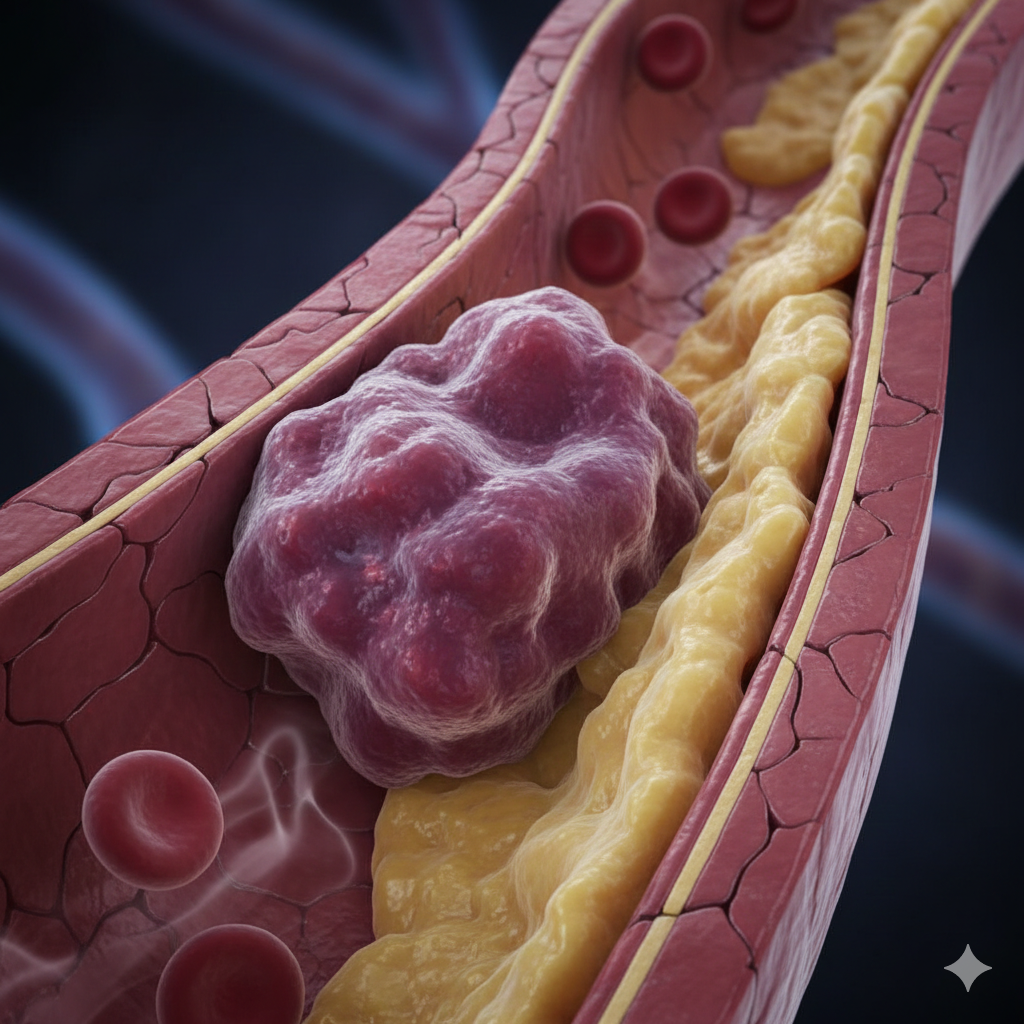
A blood clot (thrombus) is more than just a medical emergency waiting to happen; it is a metabolic disaster. In a healthy state, blood should flow like a vibrant river, carrying life-giving oxygen. When clots form—even microscopic ones—that river becomes a stagnant swamp.
- The Oxygen Paradox: Fat oxidation (the process of burning fat) literally requires oxygen. If micro-clots reduce the efficiency of blood flow to your adipose tissue (fat cells), those cells cannot “burn.” They remain locked away, resistant to even the most intense exercise.
- Inflammatory Triggers: Blood clots are often accompanied by chronic low-grade inflammation. This inflammation signals the body to enter “survival mode,” which increases the production of cortisol—a hormone notorious for belly fat accumulation. This creates a negative cycle where your body protects fat rather than burning it.
2. The “Positive” Impact of Clear Blood Vessels on Weight Loss
Maintaining healthy, elastic blood vessels acts as a powerful positive catalyst for your diet. When your circulation is optimal, your body transforms into a high-efficiency fat-burning machine.
- Boosting Basal Metabolic Rate (BMR): Smooth blood flow ensures that oxygen is delivered to the mitochondria—the “powerhouses” of your cells. This allows your body to burn more calories even while at rest.
- Thermoregulation and Lipolysis: Good circulation helps maintain a stable core body temperature. Scientific studies indicate that a $1^\circ\text{C}$ increase in body temperature can boost your metabolism by approximately 13-15%. A cold body tends to store fat to protect organs, whereas a warm, well-circulated body is optimized for lipolysis (fat breakdown).
3. The Science of “Sticky Blood” and Insulin Resistance
One of the most dangerous aspects of poor vascular health is “hyperviscosity” or sticky blood. When your blood is thick due to high sugar levels and debris, it damages the endothelium—the thin inner lining of your blood vessels.
When the endothelium is damaged, it cannot produce enough Nitric Oxide (NO). Nitric Oxide is a natural vasodilator that keeps vessels open and flexible. Without it, your vessels constrict, blood pressure rises, and your body becomes “insulin resistant.” This is a negative state where your body chooses to store every carbohydrate you eat as fat because it can’t efficiently move sugar into the muscles.
4. Daily Habits That Trigger Blood Clots (The Diet Killers)
To protect your progress, you must identify and eliminate the habits that compromise your vascular integrity:

- Prolonged Sedentary Behavior: Sitting for more than 8 hours a day slows down blood flow in the lower extremities, significantly increasing the risk of Deep Vein Thrombosis (DVT).
- Chronic Dehydration: When you are dehydrated, your blood volume decreases and becomes more viscous (thicker). Thick blood is much more likely to form clots.
- High Stress Levels: Cortisol, the stress hormone, constricts blood vessels and increases blood pressure, creating an environment where clots can form more easily.
5. 3 Actionable Strategies to Purify Your Blood and Speed Up Weight Loss
To transform your body, you must first transform your blood. Here are five advanced strategies to improve vascular health and eliminate the threat of blood clots:
A. The Power of “Blood-Thinning” Superfoods
Nature provides us with potent tools to keep our blood fluid.
- Turmeric (Curcumin): Acts as a natural anticoagulant and anti-inflammatory agent.
- Ginger: Contains salicylate, the natural chemical from which aspirin (a famous blood thinner) is derived.
- Leafy Greens: High in nitrates, which the body converts into Nitric Oxide to relax and widen blood vessels.
B. Strategic Hydration and Electrolytes
It’s not just about quantity; it’s about quality. Drinking water with a pinch of sea salt or electrolytes ensures the water actually enters your cells and thins the blood, rather than just passing through your kidneys.
C. Cold Exposure Therapy
Taking cold showers or ice baths forces the blood vessels to constrict and then dilate (vasodilation). This “vascular workout” strengthens the smooth muscles of your veins and helps flush out metabolic waste trapped in the tissues.
D. Interval Movement
If you work a desk job, use the “50/10 rule.” For every 50 minutes of sitting, perform 10 minutes of movement. Calf raises are particularly effective, as the calf muscle acts as a “second heart,” pumping blood from the lower body back up to the lungs.
E. Managing the “Silent Killer”: Stress
Chronic stress makes your blood “sticker” by increasing fibrinogen levels (a protein that helps blood clot). Incorporating deep breathing or meditation isn’t just “woo-woo” advice—it is a biological necessity for fluid blood flow and a functional diet.rapidly. This strengthens the vessel walls and flushes out stagnant blood and toxins.
6. Long-term Benefits: Beyond the Mirror
When you focus on vascular health, the benefits extend far beyond a smaller waistline. You are actively preventing:
- Deep Vein Thrombosis (DVT)
- Varicose Veins
- Cardiovascular Disease
- Chronic Fatigue Syndrome
A positive approach to vascular care ensures that as you age, your body remains resilient, energetic, and capable of maintaining its ideal weight without extreme deprivation.
7. Top 5 Superfoods to Prevent Blood Clots Naturally
To support your vascular health and accelerate your diet, include these foods in your daily routine:
- Turmeric: Contains curcumin, which inhibits platelet aggregation (clotting).
- Fatty Fish (Salmon, Mackerel): Rich in Omega-3 fatty acids, which reduce blood viscosity.
- Garlic: Acts as a natural anticoagulant and helps lower blood pressure.
- Berries (Blueberries, Raspberries): High in antioxidants that protect the endothelium (inner lining of blood vessels).
- Dark Chocolate (85%+ Cocoa): Contains flavonoids that help thin the blood and improve circulation.
The “Vascular Gold” Anti-Clotting Smoothie
This smoothie is designed to be a “cleaner” for your blood vessels. It combines nitrate-rich vegetables with anti-inflammatory spices to give your metabolism a positive kickstart.

Ingredients:
- 1 small Beetroot: (Raw or steamed) – Increases nitric oxide to dilate blood vessels.
- 1 cup Frozen Berries: – Provides antioxidants for vascular repair.
- 1 inch Fresh Ginger: – Stimulates circulation and acts as a natural blood thinner.
- 1/2 tsp Turmeric Powder: – Prevents platelet clumping.
- 1 tbsp Ground Flaxseeds: – Provides Omega-3 fatty acids.
- 1.5 cups Coconut Water or Filtered Water: – For optimal hydration and electrolytes.
Instructions:
- Peel the beetroot and ginger.
- Place all ingredients into a high-speed blender.
- Blend until completely smooth.
- Pro-Tip: Drink this 30 minutes before your workout to maximize oxygen delivery to your muscles and enhance fat burning.
Mediterranean Garlic & Salmon Salad
A perfect “vascular-friendly” lunch that focuses on healthy fats and vessel-strengthening nutrients.
Ingredients:
- 150g Grilled Salmon: (Rich in Omega-3)
- 2 cups Baby Spinach: (High in Nitrates)
- 2 cloves Raw Garlic: (Minced – for the Allicin effect)
- 1/2 Avocado: (Healthy monounsaturated fats)
- Dressing: 2 tbsp Extra Virgin Olive Oil + 1 tbsp Lemon Juice + a pinch of Cayenne Pepper (to stimulate blood flow).
Instructions:
- Toss the baby spinach with the minced garlic and lemon juice.
- Top with the grilled salmon and sliced avocado.
- Drizzle with olive oil and a dash of cayenne pepper.
- This meal ensures that your blood remains fluid while providing high-quality protein for muscle maintenance.
Frequently Asked Questions (FAQ)
Q1. How can I tell if poor circulation is affecting my weight loss? Common signs include cold hands and feet, frequent swelling (edema) in the legs, persistent fatigue even after resting, and “stubborn” fat areas that feel cold to the touch. If you exercise and eat well but still feel perpetually bloated, your vascular system might be the bottleneck.
Q2. Are all blood clots dangerous? In a “negative” sense, yes, internal clots that block blood flow are dangerous. However, the body’s ability to clot is a “positive” life-saving mechanism when you have an external cut. The goal is to prevent pathological clots (thrombosis) that occur inside the vessels due to poor lifestyle and inflammation.
Q3. Can drinking more water really prevent blood clots? Absolutely. Dehydration is one of the primary causes of “thick blood.” When your blood volume is low, the concentration of clotting factors increases. Staying hydrated is the simplest, most effective way to keep your blood flowing smoothly.
Q4. Does exercise help clear existing micro-clots? Regular aerobic exercise improves “fibrinolysis,” which is your body’s natural process of breaking down small clots. It also strengthens the heart, allowing it to pump blood with more force through narrow pathways.
Conclusion: Transforming Your Flow for Lasting Diet Success
In the pursuit of a leaner physique, we often forget that our body operates as a complex, interconnected system rather than a simple machine. As we have explored, the secret to breaking through a weight loss plateau doesn’t always lie in cutting more calories or adding another hour of cardio. Instead, it lies in the vascular health that powers every single metabolic process in your body.
Blood clots and poor circulation are the “unseen saboteurs” that turn your fat cells into locked vaults. Without sufficient oxygen delivery and efficient waste removal, your body simply cannot perform lipolysis, no matter how hard you push yourself. By shifting your perspective from “losing weight” to “improving flow,” you address the root cause of metabolic stagnation.
The journey to a healthier you should be a positive transformation involving both mindful movement and strategic nutrition. By incorporating the “Vascular Gold” Anti-Clotting Smoothie into your mornings and choosing meals like the Mediterranean Salmon Salad, you aren’t just eating for a smaller waistline—you are actively repairing the very vessels that sustain your life.
Furthermore, the FAQ insights remind us that consistency in simple habits—like strategic hydration and avoiding prolonged sedentary behavior—can have a more significant impact on your long-term success than any “crash diet.” When you protect your blood from becoming “sticky” and keep your arteries flexible, you are choosing a path of longevity.
Ultimately, your weight loss journey is a reflection of your internal health. Stop fighting against your biology and start nourishing your circulatory system. When your blood flows freely and your vessels are strong, your body naturally finds its ideal balance. Focus on your flow, and the fat loss will follow. Remember, a healthy heart and clean veins are the ultimate foundation for a vibrant, energetic, and lean life.
If you found this helpful, you might also want to check out my other post : 7 Powerful Ways to Boost Metabolism: Why Raising Body Temperature by 1 Degree is the Secret to Fast Weight Loss