
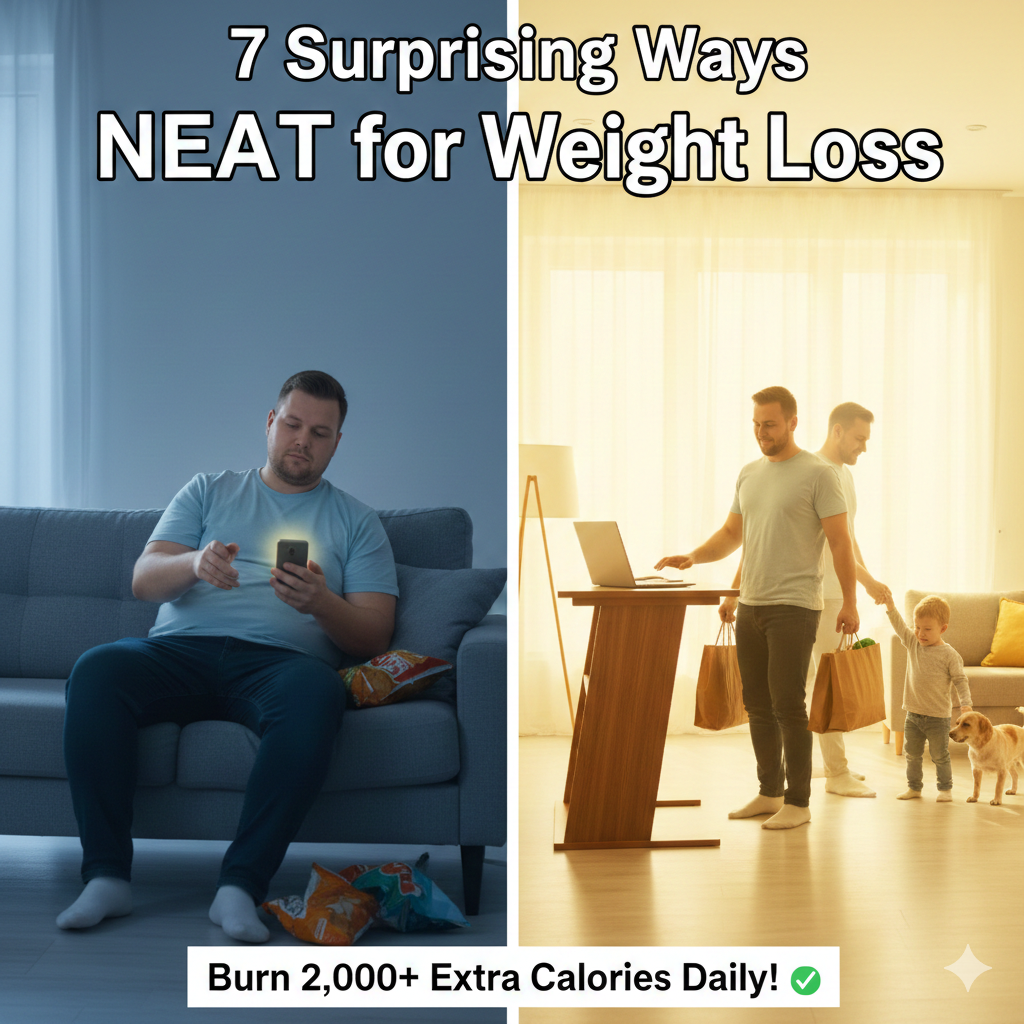
Have you ever noticed that some people seem to stay naturally thin without ever stepping foot in a gym? They aren’t necessarily blessed with “magic” genetics. Instead, if you look closely, these individuals are often “busy bees”—constantly moving, tidying up, or walking while they talk.
In the world of science, this phenomenon is known as NEAT (Non-Exercise Activity Thermogenesis). While many people believe that high-intensity workouts are the only path to fitness, the truth is that your daily “fidgeting” and household chores might be more powerful than your 30-minute jog.
In this article, we will explore why being “diligent” in your daily life is a secret weapon for weight loss and how you can harness the power of NEAT to burn hundreds of extra calories every day.
Table of Contents
What is NEAT? The Science of Non-Exercise Calories
NEAT (Non-Exercise Activity Thermogenesis) refers to the energy expended for everything we do that is not sleeping, eating, or sports-like exercise. It ranges from walking to work, typing on a keyboard, performing yard work, to even just standing up.
The concept gained massive traction through the research of Dr. James A. Levine of the Mayo Clinic. In a landmark 1999 study, Dr. Levine overfed 16 healthy participants by 1,000 calories a day for eight weeks. The results were shocking:
- Some participants gained significant fat.
- Others gained almost no fat at all.
The difference? The “lean” participants subconsciously increased their daily movement (NEAT), burning up to 698 extra calories per day just by being active in their routine. Those who stayed sedentary saw their fat storage increase by up to 10 times more than the active group.
The Massive Gap: Why Your Job Matters for Your Weight
The amount of energy you burn through NEAT varies wildly based on your lifestyle and occupation. Research shows that:
- Sedentary Office Workers: May burn only about 700 kcal per day through incidental movement.
- Active Professionals (Standing/Walking): Can burn up to 1,400 kcal per day.
- Manual Laborers: Can burn as much as 2,000 kcal more than a desk-bound worker.
As we age, our NEAT naturally declines. Retirees often see their daily travel distance drop by 5km, leading to a 29% decrease in non-exercise energy expenditure. This is why “middle-age spread” occurs even if your diet remains the same.
7 Practical Ways to Boost Your NEAT for Weight Loss
If you want to stop the “weight creep” and start burning fat effortlessly, you need to turn your daily life into a calorie-burning machine. Here are seven actionable strategies:
1. Ditch the Delivery Apps (The “In-Person” Rule)
In the age of convenience, we order everything to our door. Instead of clicking “order” on your smartphone, walk to the store to buy your groceries. Carrying bags and walking to the market uses significantly more energy than waiting for a delivery driver.
2. Master the “Active Household” Lifestyle
Don’t look at chores as a burden; look at them as a free gym membership.
- Cooking: Burns 50–100 kcal per hour.
- Vacuuming: Using a vacuum for 30 minutes can burn 120–200 kcal.
- Playing with Kids/Pets: Engaging in active play with children or taking the dog for an extra walk keeps your metabolic rate high.
3. Use a Standing Desk at Work
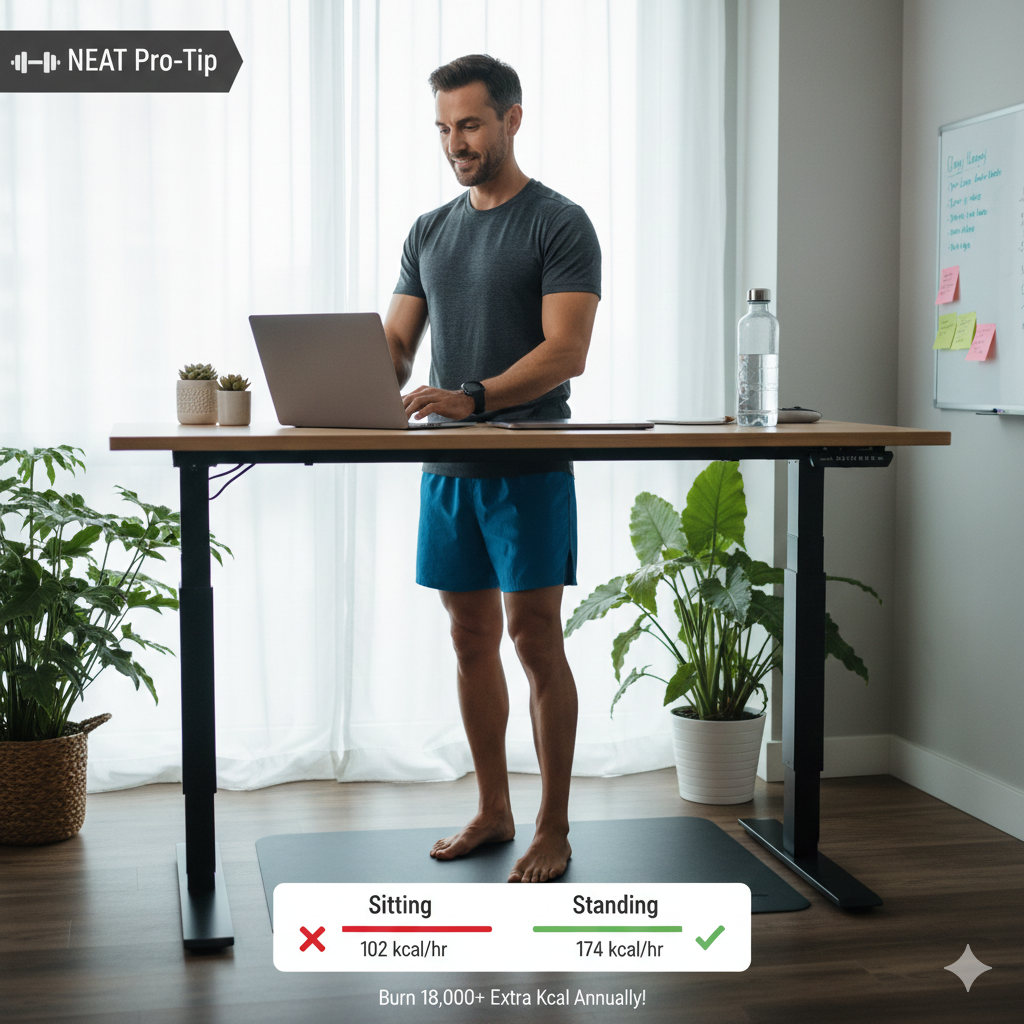
For remote workers and office employees, sitting is the enemy. According to the National Academy of Sports Medicine (NASM):
- Sitting: 102 kcal/hour.
- Standing: 174 kcal/hour. By standing for 8 hours a day, you can burn an extra 72 kcal daily, which adds up to 18,000 kcal per year—enough to lose over 2kg of pure fat without any extra effort.
4. Optimize Your TV Time
Instead of being a “couch potato,” use your screen time wisely. Try stretching, using a foam roller, or doing light leg lifts while watching your favorite show. Even standing while watching TV increases calorie expenditure compared to slumped sitting.
5. Take the Stairs, Every Time
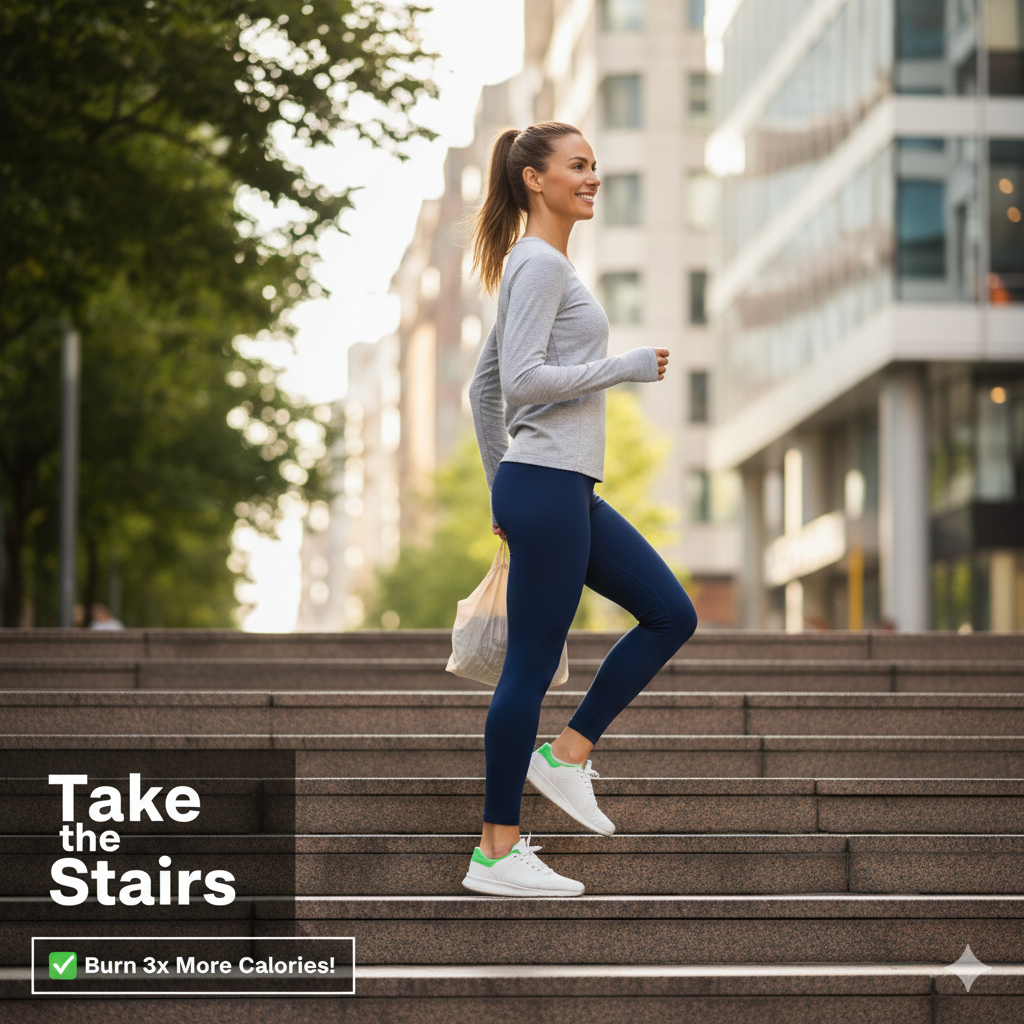
The elevator is a calorie-burning thief. Climbing stairs is one of the most intense forms of NEAT. It targets your glutes and quads while spiking your heart rate briefly, keeping your metabolism humming.
6. Walk and Talk
Whenever your phone rings, make it a habit to stand up and pace around the room. If you are in an office, suggest “walking meetings” instead of sitting in a cramped conference room.
7. Clean as You Go
Instead of a “big clean” once a week, be “diligent” (as the old saying goes). Tidying up small messes immediately keeps you moving throughout the day and prevents long periods of sedentary behavior.
The Power of an Active Household: Your Home is Your Gym
Many people view household chores as a tiring burden, but in the context of NEAT for weight loss, your home is actually a high-efficiency calorie-burning laboratory. When you stop outsourcing your chores and start doing them with intention, the metabolic rewards are staggering.
Turn Chores into Calorie-Burning Opportunities
- Vigorous Cleaning: Instead of a light dusting, engage in “deep cleaning.” Scrubbing floors on your hands and knees or washing windows for 30 minutes can burn between 150 and 250 kcal. These movements engage your core, shoulders, and arms in ways that sitting at a desk never could.
- The “One-Trip” Rule (Reversed): We often try to carry as many things as possible to save a trip. To boost your NEAT, do the opposite. If you have laundry to take upstairs, take it in two or three smaller loads. These extra trips up and down the stairs act as “micro-intervals” for your metabolism.
- Garden and Yard Work: Gardening is one of the most effective forms of NEAT. Digging, weeding, and planting for an hour can burn upwards of 300–400 kcal. It provides functional strength training as you lift soil or move pots, making it a full-body workout disguised as a hobby.
Active Parenting and Pet Care
- Active Play: Don’t just watch your children or grandchildren play at the park—join them! Playing tag, pushing a swing, or kicking a ball for 20 minutes burns significantly more energy than sitting on a bench checking your phone.
- The “Dog-Walking” Bonus: If you have a dog, view the walk as a mission. Adding a few hills to your route or increasing the pace for just 5 minutes can increase your calorie expenditure by 20% compared to a leisurely stroll.
Cooking from Scratch
In the age of delivery apps, we have become sedentary eaters. However, standing in the kitchen, chopping vegetables, whisking ingredients, and cleaning up as you go can burn 70–100 kcal per hour. When you compare this to the zero calories burned while waiting for a delivery driver, the choice becomes clear: a home-cooked meal is better for your waistline and your wallet.
Why You Shouldn’t Quit the Gym Just Yet
While NEAT is incredibly effective for calorie management, it is not a complete replacement for structured exercise.
Cardiovascular health and muscle building require higher intensity than just walking or cleaning. Strength training builds the muscle mass that increases your Basal Metabolic Rate (BMR), while aerobic exercise strengthens your heart and lungs.
The Golden Formula for Success:
[Structured Exercise] + [High NEAT] = Rapid & Sustainable Weight Loss
If you go to the gym for an hour but sit still for the other 23 hours, you are what researchers call a “Sedentary Athlete.” To truly maximize your health, you must be active both in the gym and in your living room.
❓ Frequently Asked Questions (FAQ)
To help you better understand how to integrate NEAT for weight loss into your busy schedule, here are the most commonly asked questions regarding non-exercise activity.
Q1. Can I really lose weight with NEAT alone without going to the gym?
A1. Yes, it is scientifically possible. Since NEAT can account for up to 30% of your daily energy expenditure, increasing your daily movement can create a significant calorie deficit. However, while NEAT is excellent for burning fat, it doesn’t build muscle or improve cardiovascular endurance as effectively as structured exercise. For the best body transformation, a combination of both is ideal.
Q2. Are there any side effects to using a standing desk all day?
A2. Standing for 8 hours straight without a break can lead to lower back strain or leg fatigue. The key is alternation. Experts recommend the “sit-stand-move” cycle: stand for 30 minutes, sit for 30 minutes, and take a quick 2-minute walk. Using an anti-fatigue mat and wearing supportive footwear will also protect your joints while you burn those extra calories.
Q3. Does household cleaning actually burn as many calories as a workout?
A3. While a 30-minute HIIT session burns more calories per minute than vacuuming, we tend to spend much more time on daily chores than we do at the gym. When you add up cooking, cleaning, laundry, and organizing over a full day, the total caloric burn often exceeds that of a single short workout. Consistency is the secret power of NEAT.
Q4. What is the easiest way to start increasing my NEAT today?
A4. The simplest habit is to never sit while you are on the phone. Whether it’s a business call or a chat with a friend, stand up and pace around the room. This small change can add 50–100 extra calories to your daily burn without requiring any extra time in your schedule.
Q5. Can I eat whatever I want if I increase my NEAT?
A5. Unfortunately, no. While high NEAT levels help mitigate weight gain from overeating (as shown in Dr. Levine’s study), you cannot “out-walk” a consistently poor diet. For maximum weight loss results, focus on a balanced diet rich in whole foods while maintaining a high level of daily physical activity.
Conclusion: The Power of Diligence
The old saying that “diligent people have no time to get fat” is rooted in scientific truth. By focusing on NEAT for weight loss, you aren’t just burning calories; you are changing your relationship with movement.
By accumulating small bursts of activity—cleaning, standing, walking, and playing—you can account for 15–30% of your total daily energy expenditure. This is often more than the 10–15% burned during a dedicated workout.
Start today: take the stairs, stand while you type, and stop fearing the chores. Your body will thank you.
If you found this helpful, you might also want to check out my other post : Dynamic Stretching: 12 Expert Tips and Techniques for Beginners