
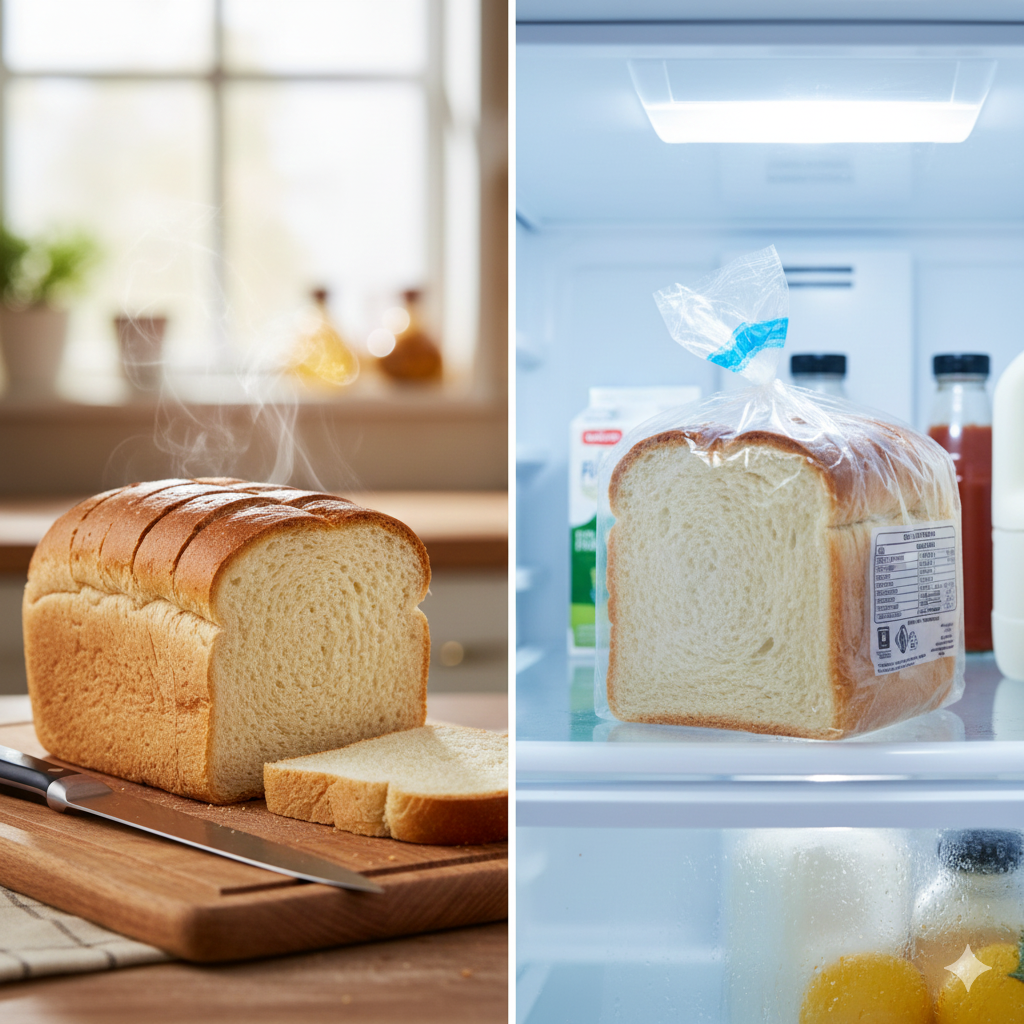
The aroma of freshly baked bread is one of life’s greatest pleasures. However, for those on a weight-loss journey, that warm loaf might be a missed opportunity. What if you could change the molecular structure of your favorite carbs to make them healthier?
The secret lies in a “super-fiber” called Resistant Starch (RS). By simply changing how you store and heat your bread, rice, and potatoes, you can turn a high-glycemic meal into a metabolism-boosting powerhouse.
1. The Science of Retrogradation: How Temperature Changes Carbs
As discussed, standard bread is high in refined flour, which the body quickly converts into glucose.1 However, when starch is cooked and then cooled, it undergoes a process called retrogradation.
During cooling, the amylose and amylopectin chains in the starch realign into a tightly packed, crystalline structure.2 This structure is physically difficult for your digestive enzymes (like amylase) to break down. Instead of being absorbed as sugar in the small intestine, it travels to the large intestine, acting more like a fiber than a carbohydrate.3
💡 Science Behind the Starch Retrogradation Explained: When amylose and amylopectin (the starch chains) cool down, they lock together like a puzzle. This “puzzle” is too strong for your enzymes to break, which is why the starch becomes “resistant.”
2. Top Sources of Resistant Starch and How to Prepare Them
To maximize your intake, you need to know which foods are the best “converters.” Here is a list of the best sources and the ideal preparation methods:
A. Bread (Sourdough & Whole Wheat)
- Method: Slice your bread and immediately put it in the freezer.
- How to eat: Toast it directly from frozen. The rapid reheating doesn’t destroy the RS formed during freezing; it actually preserves the crystalline structure better than room-temperature storage.
B. Potatoes (White or Gold)
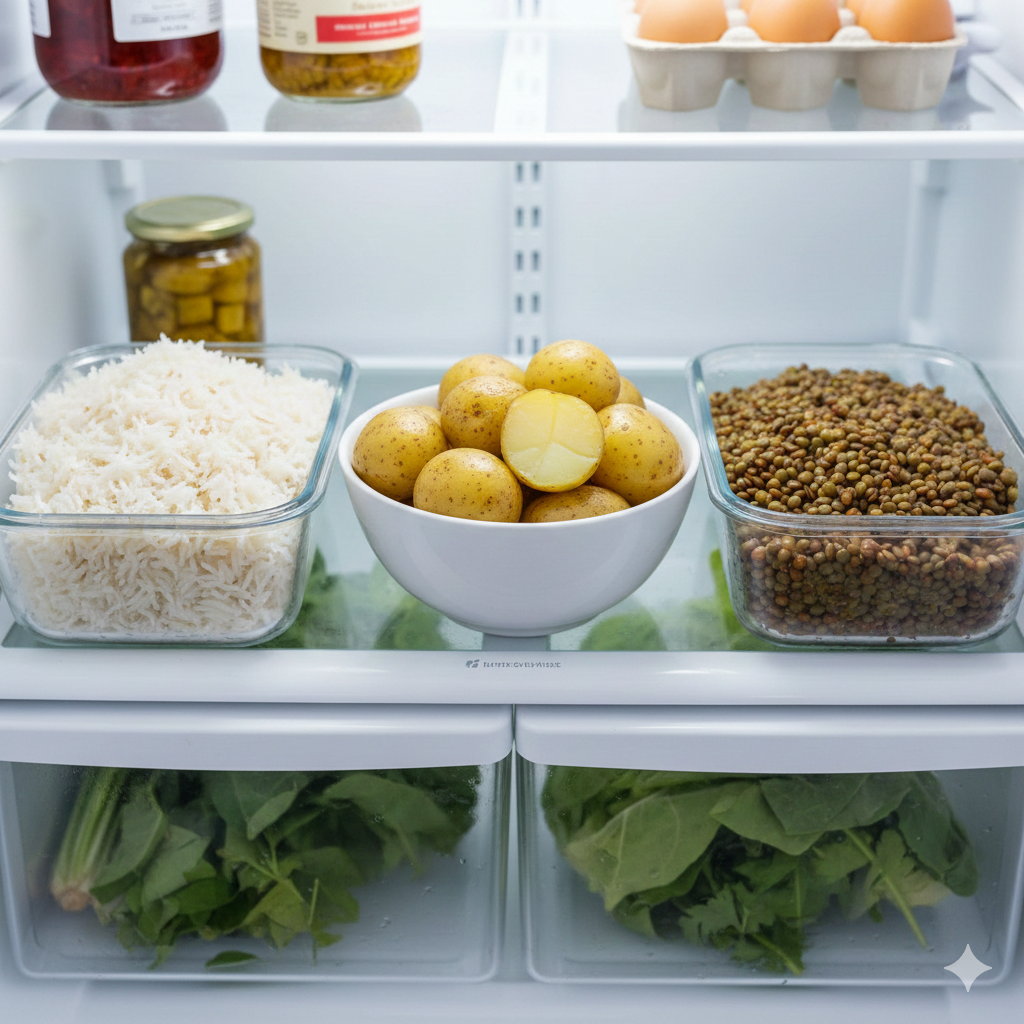
- Method: Boil or bake potatoes until soft, then refrigerate for at least 24 hours.
- How to eat: Eat them cold in a potato salad with a vinegar-based dressing (vinegar further slows digestion!) or lightly reheat them below 175°F (80°C).
C. Legumes (Lentils & Chickpeas)
- Method: These are naturally high in RS even when warm, but their content doubles when cooled after cooking.
- How to eat: Add chilled chickpeas to salads or blend cooled lentils into a hummus.
D. Green Bananas
- Method: As a banana ripens, its RS turns into simple sugar.
- How to eat: Eat them while the skin is still slightly green. You can also use Green Banana Flour in smoothies for a massive RS boost.
3. A Sample “Resistant Starch” Meal Plan
If you want to aim for the expert-recommended 20–38g of RS daily, try this sample menu:
| Meal | Menu Item | RS Benefit |
| Breakfast | Toasted Frozen Sourdough with Avocado | Stable morning blood sugar |
| Lunch | Chilled Quinoa and Chickpea Mediterranean Salad | Sustained energy without the “afternoon slump” |
| Snack | A slightly green banana or a handful of raw cashews | Appetite suppression |
| Dinner | Reheated Sushi Rice with Grilled Salmon | Improved insulin sensitivity overnight |
4. Featured Recipes for Resistant Starch: The “Metabolism-Boost”
🥗Mediterranean Potato Salad
This isn’t your average picnic potato salad. By using the “cook-chill-reheat” method and adding acidic components, we create a meal that keeps blood sugar flat and fullness high.
Ingredients
- 500g Baby Potatoes (White or Yukon Gold work best for starch crystallization)
- 1 cup Cooked Chickpeas (Canned is fine, but rinsed and chilled)
- 2 tbsp Apple Cider Vinegar (The acid further slows starch digestion)
- 1/2 Red Onion, finely diced
- 1/4 cup Fresh Parsley, chopped
- Dressing: 3 tbsp Extra Virgin Olive Oil, 1 clove minced garlic, salt, and black pepper.
Instructions
- The Prep (The Most Important Step): Boil the potatoes whole with the skin on until tender. Drain them and immediately place them in the refrigerator for at least 24 hours. This allows the maximum amount of Resistant Starch (RS) to form.
- The Assembly: Slice the chilled potatoes into bite-sized pieces.
- The Toss: In a large bowl, mix the potatoes with chickpeas, red onion, and parsley.
- The Dressing: Whisk the olive oil, apple cider vinegar, and garlic. Pour over the salad.
- Serving: You can eat this cold (highest RS content) or lightly warm it in a pan. If warming, keep the temperature low to preserve the crystalline starch structures.
🥗The “24-Hour” Gut-Health Fried Rice
Standard fried rice is usually high in simple carbs. This version uses the fridge-aging method to maximize RS, making it a “slow-release” energy meal that is perfect for weight loss.
Ingredients
- 2 cups Long-grain White or Brown Rice (Basmati is excellent for RS)
- 1 tbsp Coconut Oil (Studies suggest cooking rice with healthy fats further increases RS)
- 2 Eggs, lightly beaten
- 1 cup Mixed Vegetables (Peas, carrots, corn)
- 2 tbsp Low-sodium Soy Sauce or Liquid Aminos
- Fresh Ginger and Garlic, minced
The RS Maximization Method
- The Boil & Fat Hack: Boil the rice as usual, but add 1 teaspoon of coconut oil to the boiling water. The oil interacts with the starch molecules to change their structure.
- The Chill Phase: Once cooked, spread the rice on a tray to cool, then refrigerate for at least 12–24 hours. This is where the magic of “retrogradation” happens.
- The Quick Sauté: Heat a pan with a tiny bit of oil. Add garlic, ginger, and veggies. Toss in the cold rice and stir-fry quickly.
- Pro Tip: Do not overcook during the reheating phase. High, prolonged heat can slightly reduce RS, so keep the stir-fry quick and snappy.
🥗Overnight “Power-Fiber” Lentil & Pasta Soup
Pasta and lentils are RS superstars. When combined and cooled, they create a filling meal that suppresses appetite for hours.
Ingredients
- 1 cup Whole Grain Pasta (Penne or Fusilli)
- 1 cup Dry Green Lentils (Lentils have one of the highest natural RS contents)
- 4 cups Vegetable Broth
- 1 can Diced Tomatoes
- Spices: Cumin, Turmeric, and Black Pepper (Turmeric is anti-inflammatory!)
- Fresh Spinach
The RS Maximization Method
- The “Batch” Cook: Cook the pasta and the lentils separately until al dente (firm to the bite). Overcooking breaks down the starch too much, making it harder to convert to RS.
- The Cooling Cycle: Drain and store both in the fridge overnight.
- The Assembly: The next day, bring your vegetable broth and tomatoes to a simmer. Add your spices and the spinach.
- The Add-In: Add the cold pasta and lentils into the hot broth just 2 minutes before serving. You want them to be “warmed through” rather than boiled again.
- Why it works: The lentils provide “Type 1” Resistant Starch (physically inaccessible), while the cooled pasta provides “Type 3” (retrograded). It’s a double-hit of metabolic benefits!
5. The Ultimate Practical Storage Guide: How to Lock in Resistant Starch
Maximizing resistant starch (RS) isn’t just about cooling your food; it’s about temperature precision and time. Follow this guide to turn your kitchen into a metabolic-health laboratory.
a. The Golden Temperature: The 4°C Rule
Research indicates that the ideal temperature for starch retrogradation (the process of forming RS) is around 4°C (40°F)—which is exactly the standard setting for a home refrigerator.
- The Science: At this temperature, the water molecules and starch chains realign most efficiently.
- Pro Tip: Avoid putting steaming hot food directly into the fridge, as it raises the internal temperature of the unit. Let it sit at room temperature for about 20–30 minutes first.
b. The Timing Strategy: How Long is Enough?
While some RS forms quickly, the maximum concentration usually peaks after 12 to 24 hours.
- Bread: Freezing is faster than refrigerating. Slicing and freezing for 12 hours can increase RS significantly compared to fresh bread.
- Rice & Potatoes: A full 24-hour cycle in the refrigerator is the “Gold Standard.” Studies show that RS content in rice increases up to 2.5 times after a 24-hour chill compared to freshly cooked rice.
c. Storage Containers: Air is the Enemy
To prevent your bread or rice from becoming too dry (a common side effect of starch crystallization), use the right tools:
- Glass Containers: Best for potatoes and rice to maintain moisture.
- Airtight Freezer Bags: Essential for bread to prevent freezer burn while the starch realigns.
- Moisture Tip: When storing rice, add a small piece of damp paper towel inside the container to keep the grains from turning into hard “stones.”
d. Reheating: The “Gentle Heat” Method
Can you reheat? Yes. But there is a catch. If you heat the food to a very high temperature for a long time, the crystalline structure can “melt” back into regular starch.
- The Limit: Try to keep reheating temperatures below 175°F (80°C).
- Method: Use a microwave at 50% power or a light sauté in a pan. For bread, a quick toast is perfectly fine because the heat is brief and doesn’t penetrate the core of every starch molecule.
Frequently Asked Questions (FAQ)
Q: Can I reheat the food, or must it be eaten cold?
A: You can reheat it! While the RS content is highest when the food is cold, research shows that reheating (especially at lower temperatures) retains the majority of the resistant starch formed during the cooling process.
Q: Will this cause bloating?
A: Because RS ferments in the large intestine, it can cause gas if you increase your intake too quickly.4 Start slow and drink plenty of water to help your gut microbiome adjust.
Q: Is “Toasted” the same as “Reheated”?
A: Yes. Toasting frozen bread is one of the most effective ways to consume RS without sacrificing the texture and flavor of the bread.
Glossary
- Amylase: An enzyme in saliva and the pancreas that breaks down carbohydrates into sugars.5
- Butyrate: A short-chain fatty acid produced when RS ferments in the gut.6 It is the primary energy source for colon cells and has anti-inflammatory properties.
- Glycemic Index (GI): A ranking of how quickly foods raise blood glucose levels. RS effectively lowers the GI of a food.7
- Microbiome: The community of trillions of bacteria living in your digestive tract that influence everything from immunity to weight.8
- Prebiotic: A type of fiber that “feeds” the good bacteria (probiotics) in your gut.9
Conclusion
Weight loss doesn’t always require cutting out the foods you love. Sometimes, it’s about strategy over sacrifice. By simply cooling and reheating your starches, you can protect your gut, steady your insulin, and feel fuller for longer.

If you found this helpful, you might also want to check out my guide on The Strategic Guide to Cheat Days: How to Break Your Weight Loss Plateau
- https://hgic.clemson.edu/factsheet/starch-retrogradation-a-method-for-post-mealtime-blood-sugar-management-in-individuals-with-diabetes/ ↩︎
- https://pmc.ncbi.nlm.nih.gov/articles/PMC9957499/ ↩︎
- https://pmc.ncbi.nlm.nih.gov/articles/PMC3823506/#:~:text=Residual%20starch%20that%20is%20not,into%20the%20colon%20as%20RSI. ↩︎